


Published March 31, 2026. Open access. | Purchase book ❯ |
Slevin’s Lava-Lizard (Microlophus slevini)
Reptiles of Ecuador | Sauria | Tropiduridae | Microlophus slevini
English common name: Slevin’s Lava-Lizard.
Spanish common name: Lagartija de lava de Slevin.
Recognition: ♂♂ 22 cmMaximum distance from the snout to the tip of the tail. Snout–vent length=8.6 cm. ♀♀ 21 cmMaximum distance from the snout to the tip of the tail. Snout–vent length=7.7 cm..1 Microlophus slevini is the only lava lizard inhabiting Gardner Islet off the coast of Floreana Island. It is easily distinguished from other native lizards (iguanas and leaf-toed geckos) by its keeled tail scales, a skin fold above the shoulder, and a conspicuously enlarged interparietal scale.1 Adult males are recognized by a prominent black-and-white mid-dorsal crest and a distinctive black throat, while adult females feature a bright orange face (Fig. 1).1 This species closely resembles M. grayii in coloration and lepidosis but differs from the latter by possessing more gular scales and fewer loreal scales.1
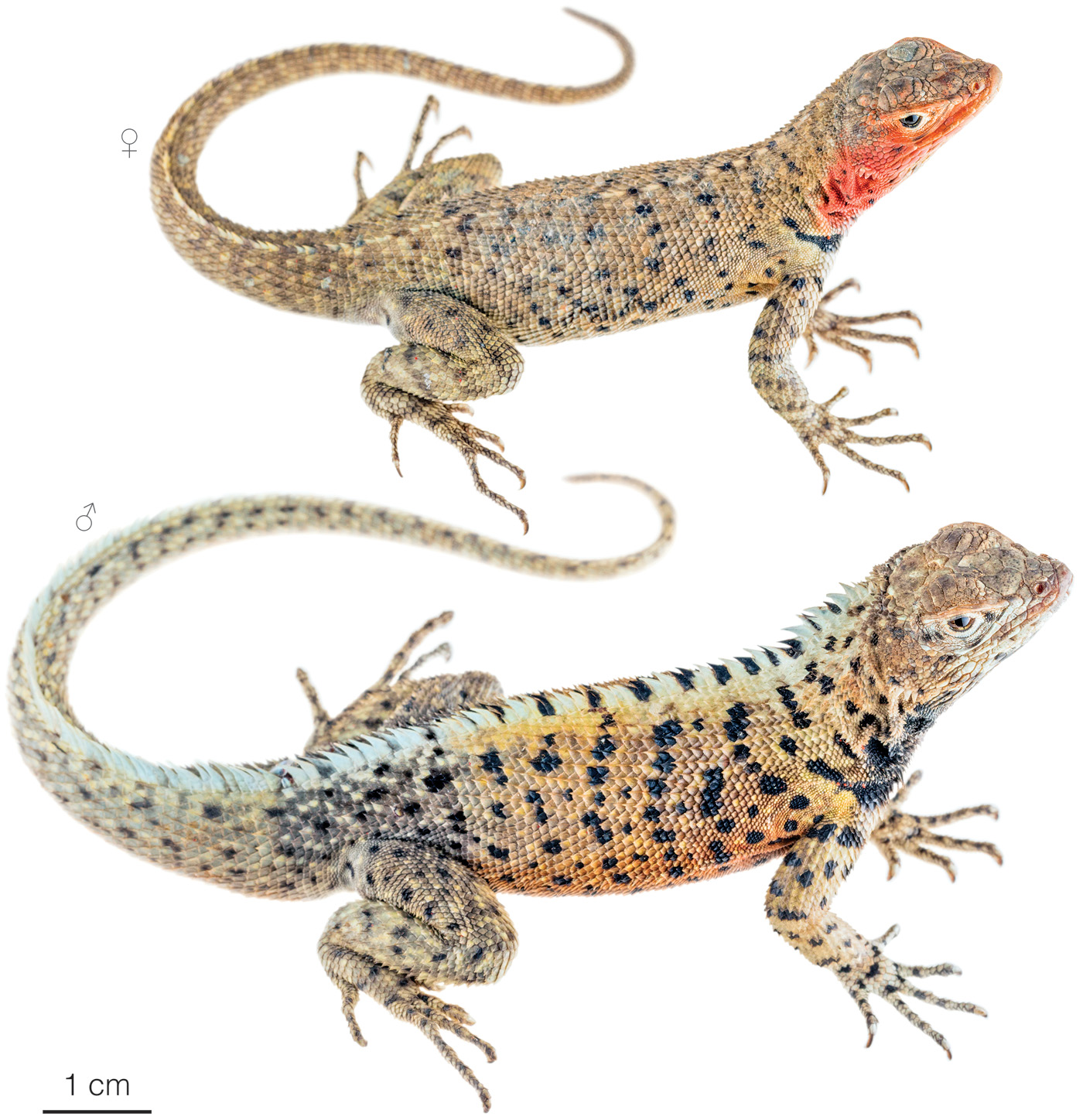
Figure 1: Individuals of Microlophus slevini from Gardner Islet, Galápagos, Ecuador.
Natural history: Microlophus slevini is a diurnal lizard found in high densities across Gardner Islet, inhabiting volcanic rocky areas and dry shrubland environments.1 During the early morning (after 9:45 a.m.) and late afternoon, individuals are frequently seen basking or foraging on soil, rocks, and tree trunks.1 To thermoregulate during the hottest hours, they retreat to shaded, unheated surfaces, eventually spending the night concealed beneath rocks or leaf-litter.2 The diet of M. slevini is unknown, but probably consists of insects as well as plant material. Known predators include the Galápagos Racer (Pseudalsophis biserialis) and the Floreana Mockingbird (Mimus trifasciatus).1,3,4 Socially, males are highly territorial, defending their areas through push-up displays and physical combat.2 Reproduction has not been studied in this species, but probably involves females nesting in sandy substrates near protective rocks or vegetation.
By purchasing the hardcover or PDF of the Reptiles of Ecuador, you help keep this website 100% free.
Conservation: Vulnerable Considered to be facing a high risk of extinction in the mid-term future.. Microlophus slevini is a recently described species and has not yet been formally evaluated by the IUCN. It is provisionally categorized here as Vulnerable (under criterion D2) because its distribution is restricted to a single 0.8 km2 islet—the smallest range of any lizard in Ecuador. Although population densities appear stable and the species has shown resilience to natural environmental fluctuations, its extreme endemism makes it highly susceptible to stochastic threats. The long-term persistence of M. slevini depends entirely on Gardner Islet remaining free of invasive predators, such as cats and rats. Potential risks include the introduction of exotic species and the deleterious effects of reduced genetic variation on individual fitness. As a model of fragmented populations, this species warrants rigorous annual monitoring and demographic analysis. Even with stable numbers, the species will likely remain listed as Vulnerable due to a total area of occupancy significantly less than 20 km2.5
Distribution: Microlophus slevini is endemic to the 0.8 km2 Gardner Islet, located 8 km east of the southern island of Floreana (Fig. 2). Gardner is a rugged volcanic tuff cone reaching an elevation of 227 m, characterized by steep, near-vertical cliffs, dramatic rock formations, and wave-eroded sea caves. Its flora is typical of the Galápagos arid zone, consisting of sparse shrublands and dry forested patches where Opuntia cacti, deciduous thorny shrubs, and native grasses predominate. These plant communities provide critical resources and nesting cover for endemic fauna, such as the endangered Floreana Mockingbird (Mimus trifasciatus). Because the islet remains uninhabited and free of invasive herbivores, its native vegetation is significantly more intact than that of the neighboring main island of Floreana.
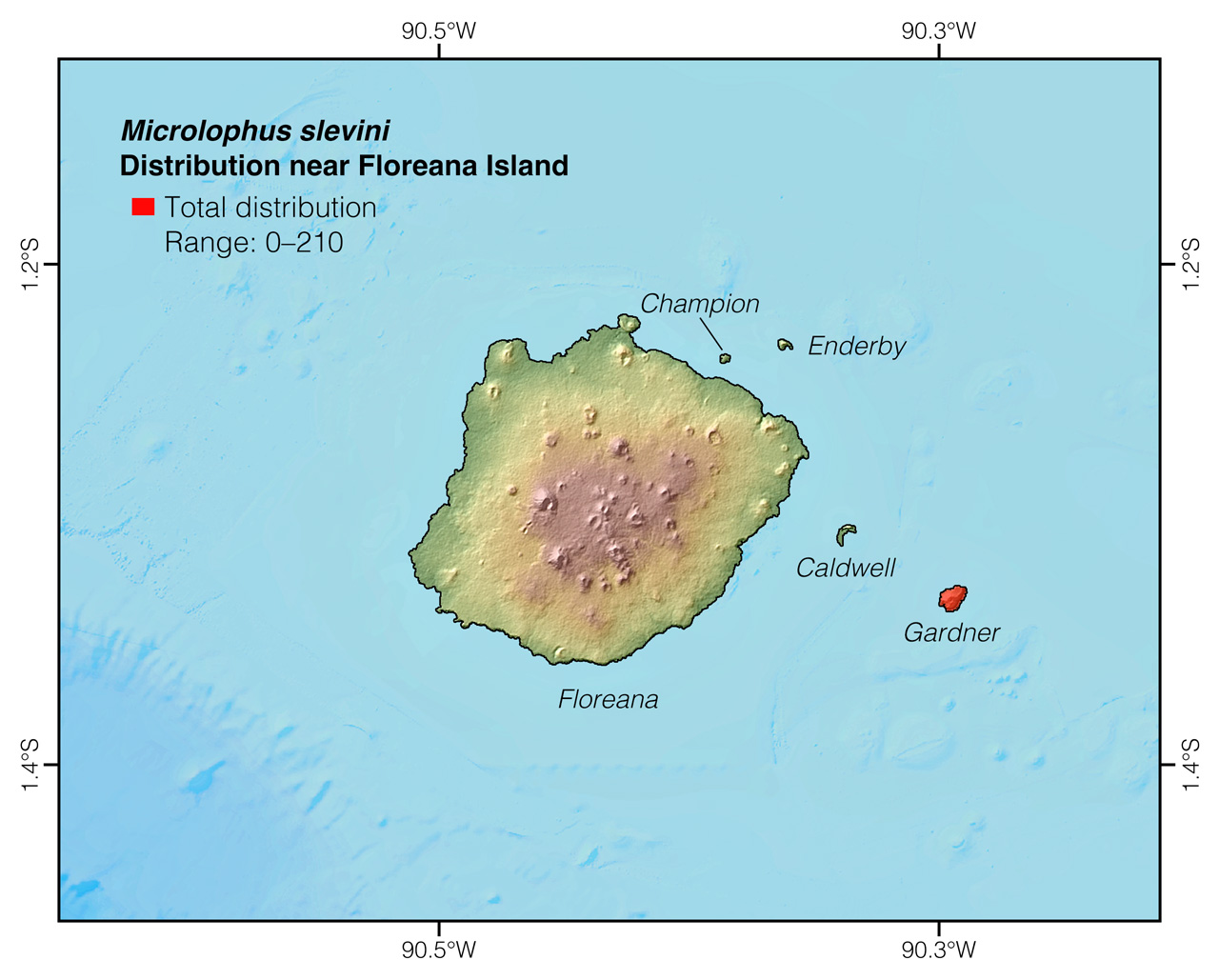
Figure 2: Distribution of Microlophus slevini near Floreana Island.
Etymology: The generic name Microlophus is derived from the Greek words mikros (small) and lophos (crest).1 The specific epithet slevini is a patronym honoring American herpetologist Joseph R. Slevin (1881–1957), who collected the majority of the type series during the California Academy of Sciences’ 1905–1906 Galápagos expedition. On October 3, 1905, Slevin spent only “a couple of hours” on Gardner-by-Floreana, yet managed to secure the specimens that would eventually be used to describe this new species. Over the course of his career, Slevin remarkably examined and recorded scale counts for more than 1,500 lava lizard specimens from across the archipelago.1
Where to observe: Individuals of Microlophus slevini can be seen daily on Gardner-by-Floreana, even during brief visits, and individuals are particularly active on sunny mornings near seabird colonies. However, it is important to note that landing and access to the islet are strictly regulated and restricted by the Galápagos National Park to protect its fragile ecosystem.
Author: Alejandro ArteagaaAffiliation: Fundación Khamai, Reserva Arlequín, Ecoruta Paseo del Quinde km 56, Santa Rosa de Mindo, Pichincha 171202, Ecuador.
Photographer: Jose VieirabAffiliation: Tropical Herping (TH), Quito, Ecuador.,cAffiliation: ExSitu, Quito, Ecuador.
How to cite? Arteaga A (2026) Slevin’s Lava-Lizard (Microlophus slevini). In: Arteaga A, Bustamante L, Vieira J (Eds) Reptiles of Ecuador: Life in the middle of the world. Available from: www.reptilesofecuador.com. https://doi.org/10.47051/NBLN7262
Literature cited:
- Torres-Carvajal O (2024) A new species of lava lizard (Iguanidae: Tropidurinae: Microlophus) from the Galápagos. Zootaxa 5428: 058–074. https://doi.org/10.47051/AQJU7348
- Field notes, Reptiles of Ecuador book project.
- Ortiz-Catedral L, Christian E, Skirrow MJA, Rueda D, Sevilla C, Kumar K, Reyes EMR, Daltry JC (2019) Diet of six species of Galapagos terrestrial snakes (Pseudalsophis spp.) inferred from faecal samples. Herpetology Notes 12: 701–704.
- Wittmer-Naranjo C, Reyes EMR, Jácome HET, Rueda D, Sevilla C, Ortiz-Catedral L (2021) Diet of the Floreana Mockingbird (Mimus trifasciatus) during the dry season on Champion and Gardner Islets, Galápagos Islands, Ecuador. Notornis 68: 245–252. https://doi.org/10.63172/164520trqpft
- IUCN (2012) IUCN Red List categories and criteria: Version 3.1. Second edition. IUCN Species Survival Commission, Gland and Cambridge, 32 pp.