


Published May 6, 2026. Open access. | Purchase book ❯ |
Striped Anadia (Anadia vittata)
Reptiles of Ecuador | Sauria | Gymnophthalmidae | Anadia vittata
English common name: Striped Anadia.
Spanish common name: Anadia listada.
Recognition: ♂♂ 22.1 cmMaximum distance from the snout to the tip of the tail. Snout–vent length=6.7 cm..1 The Striped Anadia (Anadia vittata) is distinguished from other lizards within its range by its smooth, rounded rectangular dorsal scales, a sharply pointed snout, and a broad, pale dorsolateral stripe.1 The tail is long—approximately 2.2–2.4 times the snout-vent length—and prominently striped.1 This species can be separated from the sympatric A. rhombifera by its higher number of longitudinal dorsal scale rows (56–61 vs. 44–49), its long, slender snout, and the presence of broad light dorsolateral stripes. Additionally, adult males feature reddish flanks with ocelli (Fig. 1).1
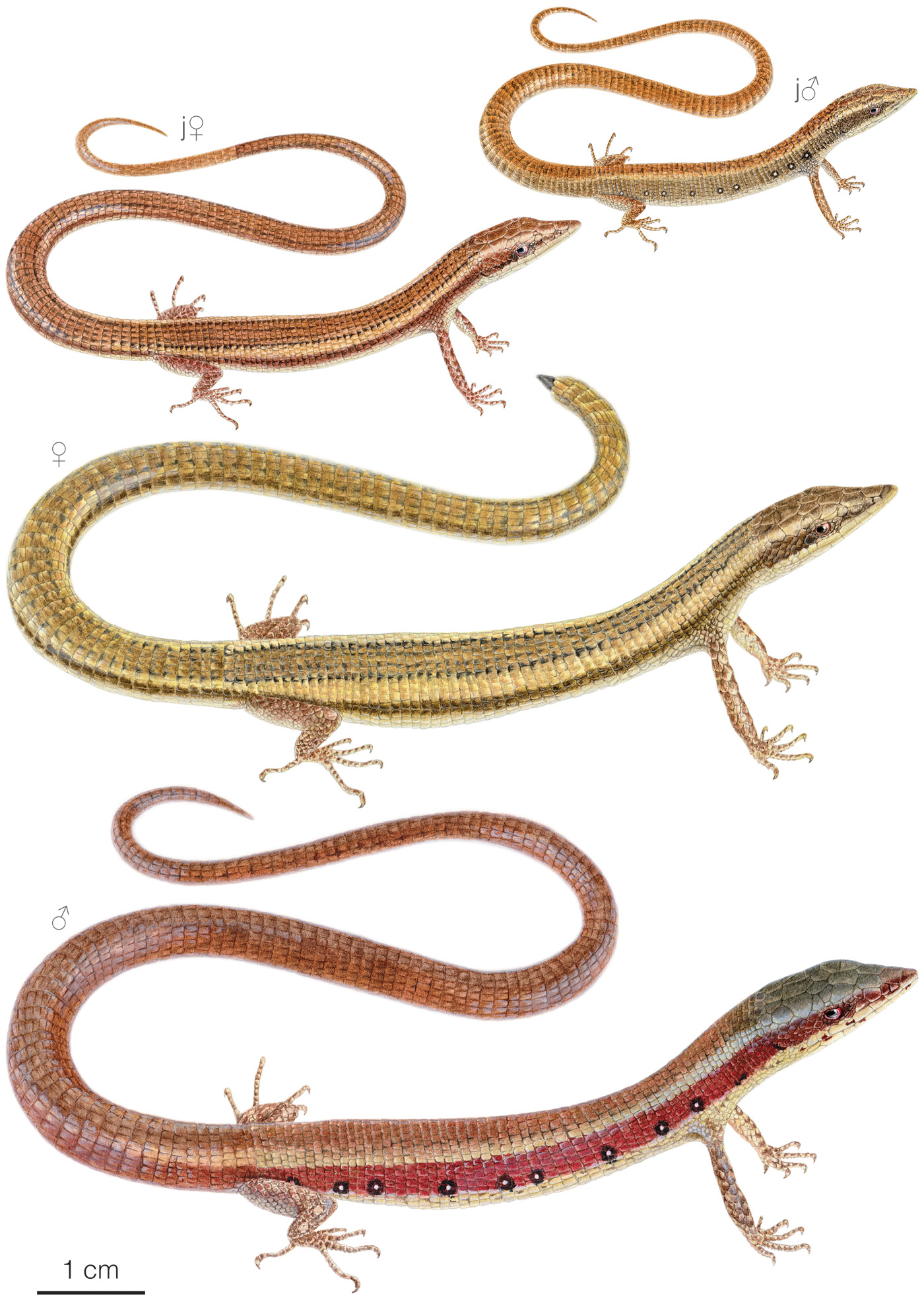
Figure 1: Illustration showing variation among individuals of Anadia vittata based on photographs of the species from throughout its distribution range.
Natural history: Anadia vittata is a rarely observed diurnal and arboreal lizard inhabiting lowland and foothill evergreen forests.1 Active individuals have been recorded on trees, leaf-litter, and small branches.1–3 Like its congeners, this species is presumed to spend the majority of its life cycle within the rainforest canopy, contributing to its infrequent detection in the field.1 Their crypsis is further enhanced by a characteristic swinging, twig-like motion typical of the genus Anadia, which effectively masks movement from predators. While specific nocturnal behaviors for A. vittata remain unconfirmed, other members of the genus are known to overnight beneath bark, within arboreal bromeliads, or inside roof thatch. Its diet is primarily insectivorous; captive individuals readily consume crickets, and field observations have recorded predation on beetles.2 Although reproductive data for this species is currently unavailable, Ecuadorian congeners typically produce clutches of two eggs.
By purchasing the hardcover or PDF of the Reptiles of Ecuador, you help keep this website 100% free.
Conservation: Least Concern Believed to be safe from extinction given current circumstances..4 Anadia vittata is categorized as Least Concern due to its wide distribution and the presence of stable populations in areas that have not yet been heavily impacted by deforestation. The species is also well-represented within several protected areas. However, the expansion of the agricultural frontier remains the primary long-term threat to Ecuadorian populations, as large-scale habitat loss continues to fragment the lowland and foothill forests upon which this arboreal species depends.
Distribution: Anadia vittata is widely distributed across the Chocoan lowlands, from eastern Panamá, through western Colombia, to extreme northwestern Ecuador (Fig. 2).
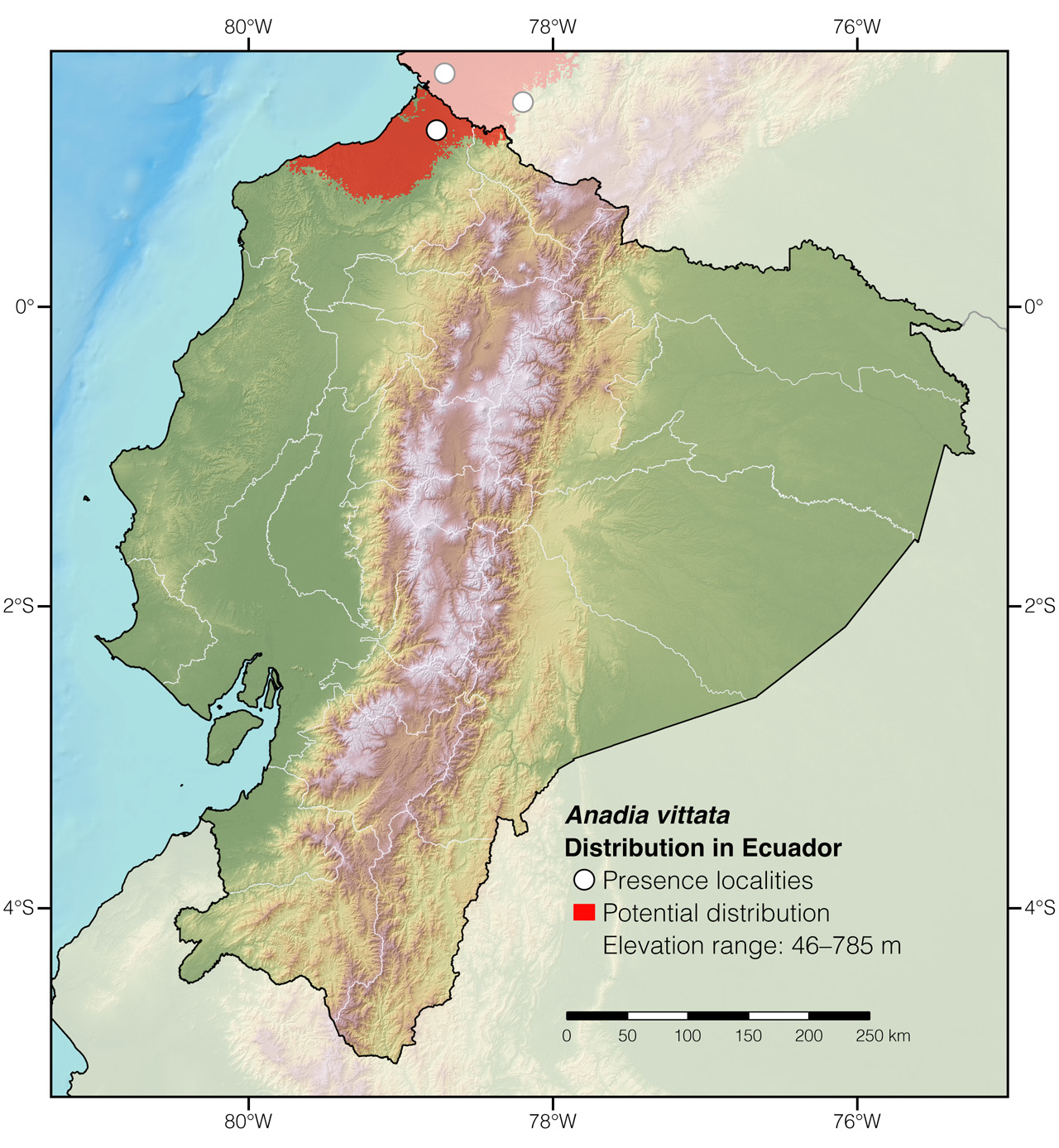
Figure 2: Distribution of Anadia vittata in Ecuador. See Appendix 1 for a complete list of the presence localities included in the map.
Etymology: The generic name Anadia does not appear to be a reference to any feature of this group of lizards, but a matter of personal taste. John Edward Gray usually selected girls’ names to use on reptiles.5–8 The specific epithet vittata is a Latin word meaning “banded” or “striped.”9
Where to observe: A single record of an Anadia vittata exists in Ecuador. It consists of two photos by Julien Touroult showing a lizard on leaf-litter near San Lorenzo in Esmeraldas province. The photographs are published on the platform iNaturalist.
Author: Alejandro ArteagaaAffiliation: Fundación Khamai, Reserva Arlequín, Ecoruta Paseo del Quinde km 56, Santa Rosa de Mindo, Pichincha 171202, Ecuador.
Illustrator: Valentina Nieto Fernández
How to cite? Arteaga A (2026) Striped Anadia (Anadia vittata). In: Arteaga A, Bustamante L, Vieira J (Eds) Reptiles of Ecuador: Life in the middle of the world. Available from: www.reptilesofecuador.com. https://doi.org/10.47051/EGXD2791
Literature cited:
- Oftedal OT (1974) A revision of the genus Anadia (Sauria, Teiidae). Arquivos de Zoologia 25: 203–265. https://doi.org/10.11606/issn.2176-7793.v25i4p203-265
- Photographic record by Andrea Canticus.
- Photographic record by Julien Touroult.
- Ibáñez R, Jaramillo C, Gutiérrez-Cárdenas P, Caicedo J, Rivas G (2016) Anadia vittata. The IUCN Red List of threatened species. Available from: www.iucnredlist.org. https://doi.org/10.2305/IUCN.UK.2016-1.RLTS.T203049A2759480.en
- Gray JE (1831) Description of a new genus of ophisaurean animal, discovered by the late James Hunter in New Holland. Treuttel, Würtz & Co., London, 40 pp.
- Gray JE (1831) A synopsis of the species of the class Reptilia. In: Griffith E, Pidgeon E (Eds) The animal kingdom arranged in conformity with its organization. Whittaker, Treacher, & Co., London, 1–110.
- Gray JE (1838) Catalogue of the slender-tongued saurians, with descriptions of many new genera and species. Annals and Magazine of Natural History 1: 274–283.
- Gray JE (1845) Catalogue of the specimens of lizards in the collection of the British Museum. Trustees of the British Museum, London, 289 pp.
- Brown RW (1956) Composition of scientific words. Smithsonian Books, Washington D.C., 882 pp.
Appendix 1: Locality data used to create the distribution map of Anadia vittata in Ecuador (Fig. 2). Asterisk (*) indicates type locality.
| Country | Province | Locality | Source |
| Colombia | Cauca | Isla Gorgona | Oftedal 1974 |
| Colombia | Cauca | Parque Nacional Munchique | NRM 31429; VertNet |
| Colombia | Chocó | Peña Lisa* | Oftedal 1974 |
| Colombia | Nariño | Reserva Indígena La Nutria | iNaturalist; photo examined |
| Colombia | Nariño | Tangareal del Mira | Castaño et al. 2004 |
| Colombia | Valle del Cauca | Bajo Calima | UMMZ 131063; VertNet |
| Colombia | Valle del Cauca | Campamento Cartón Colombia | Oftedal 1974 |
| Colombia | Valle del Cauca | Campo Chancos | Arredondo 2013 |
| Colombia | Valle del Cauca | Parque Nacional Farallones de Cali | Valencia-Zuleta et al. 2014a |
| Colombia | Valle del Cauca | Represa del Alto Anchicayá | Valencia-Zuleta et al. 2014a |
| Ecuador | Esmeraldas | Calderón, 1.6 km SE of | iNaturalist; photo examined |