


Published June 26, 2026. Open access. | Purchase book ❯ |
Victory Anole (Anolis triumphalis)
Reptiles of Ecuador | Sauria | Anolidae | Anolis triumphalis
English common name: Victory Anole.
Spanish common name: Anolis de la victoria.
Recognition: ♂♂ 13.9 cmMaximum distance from the snout to the tip of the tail. Snout–vent length=5.5 cm..1 The Victory Anole (Anolis triumphalis) is characterized by its small body size and specialized lichenous crypsis. The dorsal ground color is typically tan-brown or pale gray—shifting to dark brown under physiological stress—accented by a variable pattern of blackish, bark-like markings (Fig. 1).1,2 The venter and throat are cream, and the iris is a distinct reddish-brown.1,2 The most diagnostic feature is the dewlap, which is bright orange with red streaks and rows of dark brown scales.1,2 While present in both sexes, the male dewlap is significantly more developed, extending posteriorly to the mid-venter. This species may be confused with the larger A. lyra, but is distinguished by its larger orange-colored dewlap.1,2 Sexual dimorphism is pronounced: males possess a more extensible dewlap, a fleshy dorsal crest, and a noticeable thickening at the tail base due to the presence of the hemipenes.
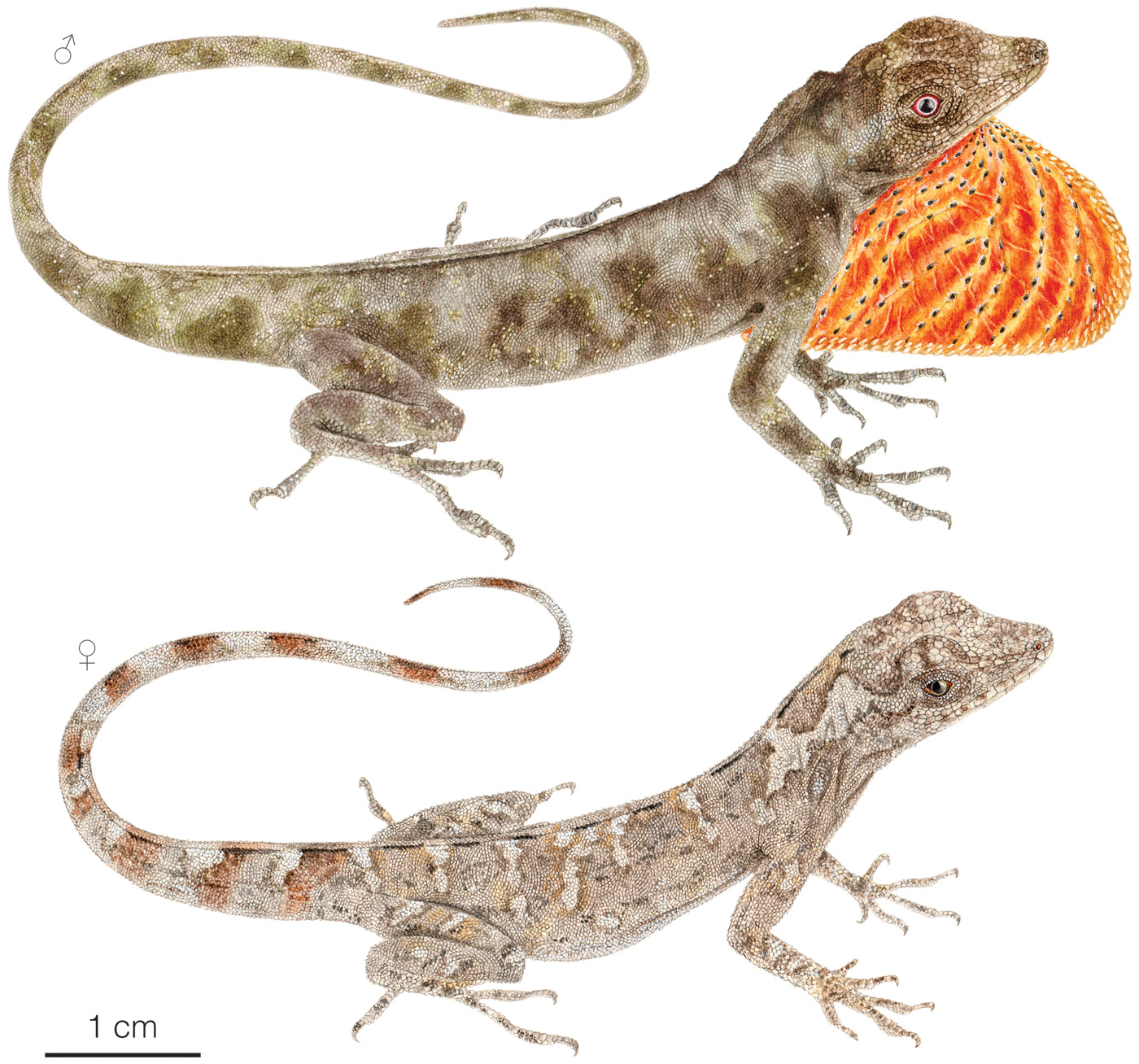
Figure 1: Illustration showing variation among individuals of Anolis triumphalis based on photographs of the species from throughout its distribution range.
Natural history: Anolis triumphalis is a rarely observed member of the Chocó rainforest herpetofauna, a scarcity likely attributed to its extreme lichenous crypsis and arboreal lifestyle. The species inhabits pristine rainforests as well as adjacent pastures and agricultural lands, provided that mature trees remain standing.1–3 Ecologically, the Victory Anole belongs to the “tree-trunk” ecomorph (or guild) because of its small body size, short tail, and shortened hind limbs—traits specialized for navigating large vertical surfaces.4 While frequently observed on large trunks, it is not restricted to them; individuals are also found on saplings and small trees. Behavioral observations indicate high activity levels, with individuals seen running vertically along trunks,3 crossing dirt roads,1 or even entering human structures near forest borders.2 When disturbed, they may remain motionless or run for a few meters across the ground. If on a trunk, they move to the opposite side or run up along the trunk, sometimes up to 5 m above the ground. At night, these anoles sleep on leaves or stems at low elevations (less than 1.5 m above the ground).5–7 This is a strategic adaptation: by resting on thin vegetation, they can detect the vibrations of approaching predators, allowing them to leap into the darkness to escape.
By purchasing the hardcover or PDF of the Reptiles of Ecuador, you help keep this website 100% free.
Conservation: Least Concern Believed to be safe from extinction given current circumstances.. Anolis triumphalis is a recently described species and has not yet been formally evaluated by the IUCN Red List. It is provisionally categorized here as Least Concern due to its wide distribution and the presence of stable populations in areas that have not yet been heavily impacted by deforestation. The species is also well-represented within several protected areas. However, the expansion of the agricultural frontier remains the primary long-term threat to Ecuadorian populations, as large-scale habitat loss continues to fragment the lowland and foothill forests upon which this arboreal species depends.
Distribution: Anolis triumphalis is widespread throughout the Chocoan lowlands, from eastern Panamá, through western Colombia, to extreme northwestern Ecuador (Fig. 2).
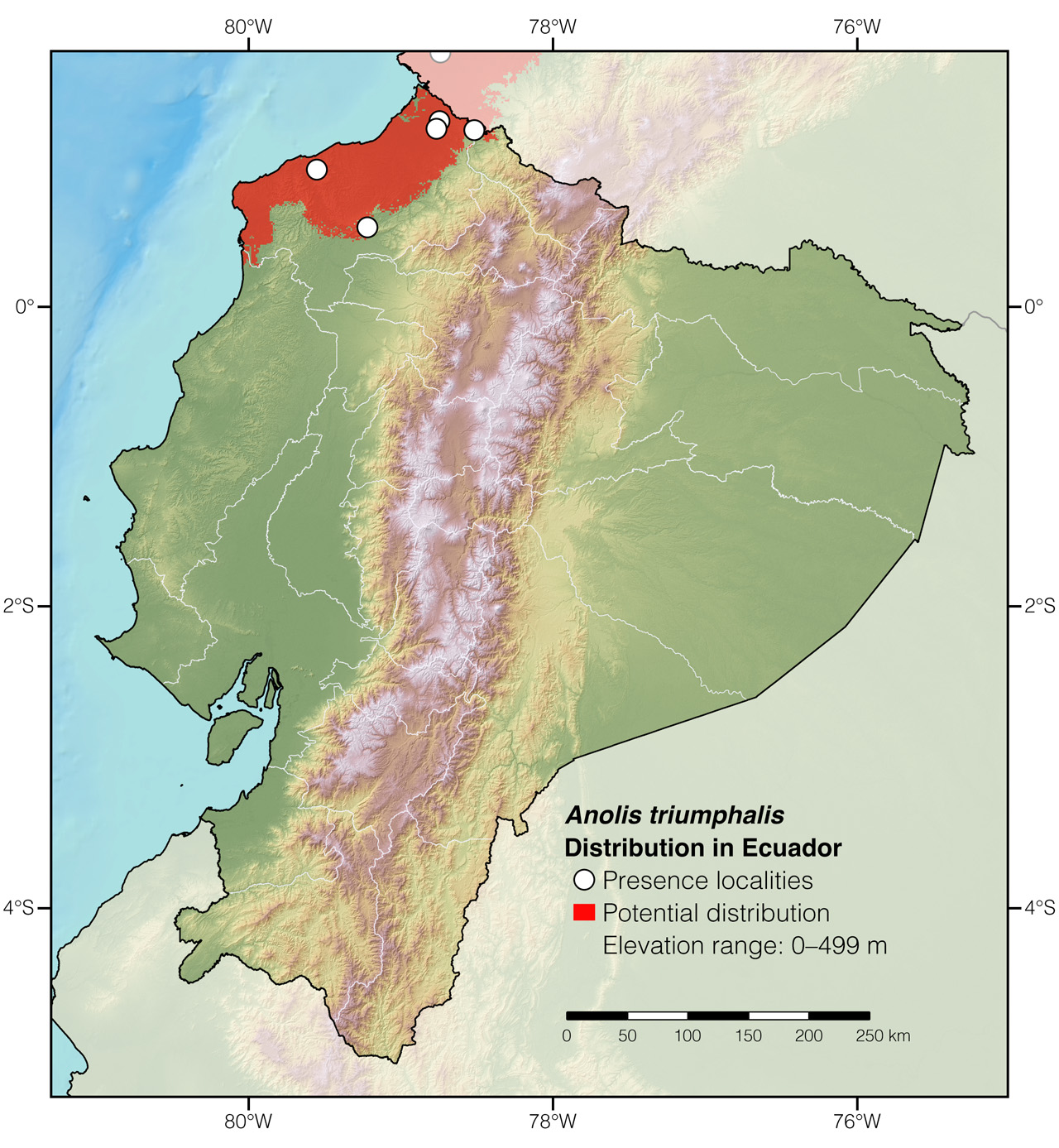
Figure 2: Distribution of Anolis triumphalis in Ecuador. See Appendix 1 for a complete list of the presence localities included in the map.
Etymology: The generic name Anolis is thought to have originated from Cariban languages, specifically from the word anoli, which is the name Arawak peoples may have used to refer to this group of lizards.8 The epithet triumphalis is a Latin adjective meaning “of victory.” It commemorates the moment of elation experienced by the discovery team upon capturing the holotype. The name refers to the dramatic nature of its discovery, as the lizard was first spotted racing across a road in front of a moving vehicle.1
Where to observe: Only five records of Anolis triumphalis exists in Ecuador, with two of them originating at or near the Bosque Protector La Chiquita, where these lizards were observed on large tree trunks in semi-open areas.
Author: Alejandro ArteagaaAffiliation: Fundación Khamai, Reserva Arlequín, Ecoruta Paseo del Quinde km 56, Santa Rosa de Mindo, Pichincha 171202, Ecuador.
Illustrator: Valentina Nieto Fernández
How to cite? Arteaga A (2026) Victory Anole (Anolis triumphalis). In: Arteaga A, Bustamante L, Vieira J (Eds) Reptiles of Ecuador: Life in the middle of the world. Available from: www.reptilesofecuador.com. https://doi.org/10.47051/EYHV7750
Literature cited:
- Nicholson KE, Köhler G (2014) A new species of the genus Norops from Darién, Panama, with comments on N. sulcifrons (Cope 1899) (Reptilia, Squamata, Dactyloidae). Zootaxa 3895: 225–237. http://dx.doi.org/10.11646/zootaxa.3895.2.5
- Barrio-Amorós CL, Quiroz M, Porras-Ramírez C, Villanueva-Maldonado R, Estrada-García A, Batista A (2023) Amphibians and reptiles encountered during an expedition to Panama. Reptiles & Amphibians 30: e18359. https://doi.org/10.17161/randa.v30i1.18359
- Field notes, Reptiles of Ecuador book project.
- Moreno-Arias R, Velasco JA, Urbina Cardona J, Cárdenas-Arévalo G, Medina Rangel G, Gutiérrez Cárdenas P, Olaya-Rodriguez M, Noguera-Urbano E (2021) Atlas de la biodiversidad de Colombia. Anolis. Instituto de Investigación de Recursos Biológicos Alexander von Humboldt, Bogotá, 72 pp.
- Photographic record by Edison Blandon.
- Photographic record by Tom Kennedy.
- Photographic record by David Gómez.
- Allsopp R (1996) Dictionary of Caribbean English Usage. Oxford University Press, Oxford, 776 pp.
Appendix 1: Locality data used to create the distribution map of Anolis triumphalis in Ecuador (Fig. 2).
| Country | Province | Locality | Source |
| Colombia | Cauca | Centro Ecoturistico El Palomar | iNaturalist; photo examined |
| Colombia | Cauca | Reserva Forestal San Cipriano | iNaturalist; photo examined |
| Colombia | Cauca | San Cipriano | Photo by Tom Kennedy |
| Colombia | Chocó | Biological Station El Amargal | Moreno-Arias et al. 2020 |
| Colombia | Nariño | Dirección General Marítima (DIMAR) | Pinto-Erazo et al. 2020 |
| Colombia | Risaralda | El Volga | iNaturalist; photo examined |
| Ecuador | Carchi | Tobar Donoso | iNaturalist; photo examined |
| Ecuador | Esmeraldas | Bosque Protector La Chiquita | MCZ 158388; VertNet |
| Ecuador | Esmeraldas | Cerro Zapallo | Ayala-Varela 2024 |
| Ecuador | Esmeraldas | Reserva Biológica Canandé | Ayala-Varela 2024 |
| Ecuador | Esmeraldas | Tundaloma Lodge | Reptiles of Ecuador book database |